Species care guide
Purple heart
Tradescantia pallida
How to care for purple heart (Tradescantia pallida) indoors and out: why it needs more sun than other Tradescantia to stay purple, how to water a drought-tolerant trailer, how to pinch and root its fragile stems, and what its sap does to skin.

- Light
- Full sun to partial shade; full sun gives the deepest purple, shade turns it greener, and hot sun through glass can scorch the leaves
- Water
- Moderately while it grows and sparingly in winter, in compost that drains well; it tolerates drought and some neglect
- Humidity
- No special humidity needs in the RHS or extension advice; ordinary room air suits it
- Temperature
- Frost tender in a pot: keep it above about 10°C, and bring container plants indoors for winter
- Pets & toxicity
- Not on the ASPCA list; extension sources rate it low severity: chewing can irritate the mouth and stomach, and the sap can irritate skin in people and pets
- Difficulty
- Very easy: the only skills are giving it enough sun to stay purple and pinching it back before it sprawls
Purple heart is the one Tradescantia that colours up in full sun. Put it in the shade its relatives like and it slowly turns green.
What purple heart is
Purple heart is Tradescantia pallida, a trailing perennial in the spiderwort family, Commelinaceae. University of Wisconsin Extension and University of Arkansas Extension both place its native range in northeast Mexico, from Tamaulipas to the Yucatán, and NC State Extension notes that it grows there as a ground cover. It has been introduced well beyond Mexico: NC State lists it in parts of South America, Asia, Africa, Europe and the Caribbean, and in Alabama, Florida and Louisiana.
You will see it under older names too. Wisconsin Extension explains that it was first described as Setcreasea pallida in 1911 and moved into Tradescantia in 1975, and that S. pallida and S. purpurea are still often used. Purple queen and purple spiderwort are other common names. The specific epithet pallida means "pale", which Arkansas Extension says describes the washed-out, greyish purple-green leaves of the wild species. The plant almost everyone grows is the cultivar 'Purpurea', whose leaves are a bright purple; according to Arkansas, it is the only form grown commercially. The common name purple heart most likely comes from the American military medal, Arkansas suggests, since nothing about the plant is heart-shaped.
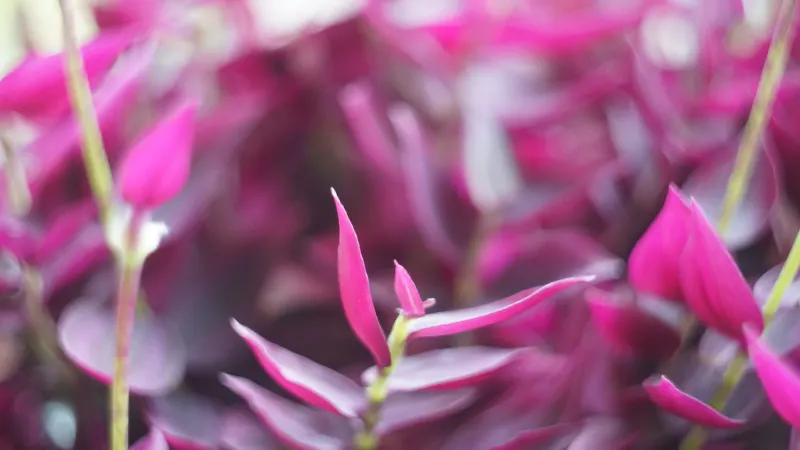
The leaves are long, narrow and slightly fleshy, purple on both sides according to NC State Extension, and covered in fine pale hairs. NC State gives them as 10–15 cm long, on thick, fleshy purple stems that trail or grow upwards and root at their nodes. Those stems are fragile: Wisconsin Extension notes they break easily, and NC State warns that strong wind damages them. The RHS describes the plant as up to about 20 cm tall, and NC State gives about 30 cm tall with a spread of 30–60 cm.
The flowers are small and pink, with three petals and bright yellow stamens, borne at the tips of the stems. The RHS gives them as 2–3 cm across, in summer; Wisconsin Extension says they appear from midsummer into autumn. NC State notes that each bloom lasts only a day, and Arkansas Extension adds that each flower opens only in the morning, with new ones appearing through the growing season. You grow purple heart for its leaves. The flowers are a bonus.
How it differs from an inch plant
Purple heart is a close relative of the inch plant, Tradescantia zebrina, and the two are often confused: NC State Extension lists T. zebrina among the species people mistake it for. Much of the routine is shared, above all the habit of pinching the stems and rooting the pieces, which the inch plant guide covers in detail. The difference that matters most is light.
The inch plant guide recommends bright, indirect light. Purple heart is a sun plant. NC State Extension recommends full sun to partial shade and says full sun gives the best purple colour, and Wisconsin and Arkansas Extension both say that in shade it turns green or looks washed out. It is also much more drought tolerant, which changes how you water it. Treat it like a sun-loving bedding plant that happens to grow well in a pot, rather than like a tropical shade plant.
Light: the colour comes from the sun
Light decides what a purple heart looks like. In full sun the leaves are a deep, even purple. In shade, NC State, Wisconsin and Arkansas Extension all agree, the colour fades towards green.
Indoors, that means the sunniest window you have. There is one caution. The RHS notes that direct sun may scorch the leaves, and for 'Purpurea' it suggests part shade or bright, filtered light. Outdoors in summer, extension sources recommend full sun without hesitation. Under glass, in a south-facing window in high summer, watch the leaves. If they start to brown or bleach, move the pot a little back from the glass or give it some light shade in the hottest part of the day.
If you use Botanical Legacy, the place you put a Specimen in carries the light you described for it, as a level or as the window's direction. When a plant's light needs and its place don't match, the app flags it and names a better place you already have. It cannot measure the light in the room, so watching whether the purple holds is still your job.
How to water a purple heart
Purple heart is easy to water because it forgives mistakes in the dry direction. Wisconsin Extension calls it drought tolerant and able to handle neglect, though it also copes with frequent watering. NC State Extension rates it moderately drought tolerant, and Arkansas Extension says it tolerates drought well but grows best with plenty of moisture. The RHS advice for a pot is to water moderately while the plant is growing and sparingly in winter.
So water it well in spring and summer, when it is in sun and growing fast, and let the compost dry somewhat between waterings. In winter, when growth slows, cut back. Wisconsin Extension's advice for plants brought indoors over winter is to water less, and to hold off feeding until new growth appears in spring.
What the plant needs is drainage. NC State recommends moist, well-drained soil rich in organic matter, and the RHS a moist but well-drained, peat-free, loam-based compost. Use a pot with a drainage hole and empty the saucer after watering. The longer method for reading a pot, rather than a calendar, is in when to water your houseplants.
A model of the individual plant helps with this. Botanical Legacy keeps a Digital Shadow of each Specimen in your Sanctuary, a running estimate of when that particular pot will be dry. On every plan, including the free one, you can log a quick soil check from the Specimen's page, from bone dry to wet. After three checks between waterings, the model starts correcting its drying rate for that plant from what you found. The RHS waters a purple heart moderately in growth and sparingly in winter, and the checks are how the model learns what that means for your pot.
Temperature, overwintering and feeding
Purple heart is frost tender, and sources disagree about how tender, partly because they are rating different forms. NC State Extension rates it hardy in USDA zones 10a–11b and says it does not tolerate temperatures below about 10°C, so container plants must come indoors for winter. The RHS rates the species H1C, which needs a minimum of 5–10°C, but rates 'Purpurea' H3, hardy in coastal and relatively mild parts of the UK. Arkansas Extension calls 'Purpurea' reliably hardy to zone 8, and Wisconsin Extension notes that in cold areas it dies back to the ground in winter and regrows from the roots in spring. NC State adds that it may return in protected spots or mild winters.
For a pot, follow the cautious figure, which is the one NC State gives for containers: keep it above about 10°C, and bring it in before the nights turn cold. If it spends the summer on a balcony or patio, when to bring plants inside for fall covers the timing and the pest check before it comes back in.
Feed it while it grows. Wisconsin Extension suggests a monthly feed during active growth, and none in winter until new spring growth appears.
Pinching, cutting back and propagation
Left alone, purple heart grows long and sprawling; Arkansas Extension calls it a sprawling perennial. The fix is the same as for the inch plant. The RHS advises pinching out the growing tips to make the plant bushier, and Wisconsin Extension adds that cutting it back after flowering keeps it from turning spindly. The RHS also says to remove plain green foliage, so if a shoot comes up without its purple, cut it out.
Every piece you cut off can become a new plant. Wisconsin Extension says cuttings from any part of the plant root easily: a node pushed into loose compost usually roots, or you can root the cutting in water. The RHS recommends softwood cuttings from the stem tips in spring or summer, rooted in peat-free compost or in water, then potted into loam-based compost. NC State Extension notes that the stems root at the nodes on their own. Seed is rarely available, according to Wisconsin, so cuttings are the way to get more plants.
Because the stems break so easily, you will often have pieces to root anyway. Tuck them back into the pot to fill bare patches, the way the inch plant guide describes. For more on rooting cuttings in water and compost, see how to propagate your plants.
Outdoors: a word on spreading
In a mild climate, purple heart is a popular ground cover and bedding plant. NC State Extension lists ground cover, edging, mass planting on slopes, containers and hanging baskets among its uses, and Wisconsin Extension notes that it spreads fairly quickly. NC State also warns that it can become invasive in beds. Where it is hardy, plant it where you are happy for it to spread, or keep it in containers. In the UK, the RHS suggests growing it as bedding, in containers moved indoors for winter, or as a houseplant, and the question does not arise.
Common problems
Leaves turning green. Too little light. Every extension source agrees that shade turns it green. Move it to the sunniest spot you have; new growth comes back purple. Cut out shoots that stay plain green, as the RHS advises.
Leggy, sprawling stems. Its natural habit as a trailer. Pinch the tips and cut it back after flowering, as Wisconsin Extension suggests, and root the pieces to fill out the pot.
Brown, scorched patches. Hot sun through glass. The RHS notes that direct sun may scorch the leaves. Move it slightly back from the window in high summer.
Broken stems. The stems are fragile and snap easily, Wisconsin and NC State Extension both note. Keep it out of strong wind, and root the broken pieces.
Pests. The RHS lists red spider mite, mealybugs, aphids, vine weevil and thrips; NC State Extension adds scale, and says outdoor plants may be eaten by caterpillars, slugs and snails. Wisconsin Extension calls scale and mealybugs the likely problems on a plant that otherwise has few pests. The RHS describes it as generally disease-free. A photo to the Doctor, powered by Botanical Vision v5, returns a health verdict, the likely cause of what it sees, and what to do. The guide to common houseplant pests shows how to tell them apart.
Red, itchy skin after pruning. The sap. See the toxicity answer below, and wear gloves.
Frequently asked questions
Is purple heart the same as an inch plant?
No, though they are close relatives in the same genus. Purple heart is Tradescantia pallida; the inch plant is Tradescantia zebrina, and NC State Extension lists it among the species purple heart is often confused with. Purple heart has leaves that are purple on both sides and wants full sun, where the inch plant guide recommends bright, indirect light. Both are pinched and grown on from cuttings in much the same way.
How much sun does a purple heart need?
As much as you can give it. NC State Extension recommends full sun to partial shade and says full sun gives the best purple colour; in shade it turns green. Indoors, use your sunniest window, but watch for scorch where hot summer sun comes through the glass, which the RHS warns about.
Why is my purple heart turning green?
It is not getting enough light. Wisconsin and Arkansas Extension both note that plants in shade turn green or look washed out. Move it into more sun and the new growth comes back purple, and cut out any shoots that stay plain green.
How do you propagate purple heart?
From cuttings, which root easily. Wisconsin Extension says a cutting from any part of the plant will root: push a node into moist compost, or stand the cutting in water. The RHS recommends tip cuttings in spring or summer, potted into loam-based compost once rooted.
Is purple heart toxic to cats and dogs?
The ASPCA does not list Tradescantia pallida. It does list a close relative, Tradescantia fluminensis, as toxic to dogs, cats and horses, with dermatitis as the sign. For purple heart itself, NC State Extension rates its toxicity as low severity: eating it can irritate the mouth and stomach in people and pets, and the sap and leaves can cause skin irritation and contact dermatitis. Wisconsin Extension says the sap may cause redness or irritation in some people and dogs, though this is uncommon. The RHS lists it as a skin allergen and advises wearing gloves. Keep it out of reach of pets that chew, and call your vet if one is unwell after eating it.
Can purple heart go outside in summer?
Yes. It is a common bedding, container and hanging-basket plant, and full sun outdoors gives it its best colour. It is frost tender in a pot, so bring it in before nights fall below about 10°C, which is the limit NC State Extension gives. Shelter it from strong wind, which breaks its stems.
Can Botanical Legacy help with a plant this easy?
It helps with the parts that are easy to get wrong without noticing: light and water. If its place does not have the light a purple heart needs, the app flags the mismatch and names a better place you already have. Its Digital Shadow estimates when the pot will be dry, and soil checks you log on any plan teach the model that plant's real drying rate. Progress photos build growth curves of height and leaf count, so a round of pinching and the regrowth after it show up as a trend instead of a guess.
Start your sanctuary
Botanical Legacy's free Observer plan covers up to five Specimens, each with its own continuously running Digital Shadow and soil checks that teach it each pot's drying rate. A purple heart, which wants moderate water while it grows and little in winter, is the kind of plant a per-pot model is for. Every new account also includes a 14-day trial of Cultivator, the paid plan, which adds the local weather feed and soil sensor support.
START YOUR SANCTUARY - FIVE FREE SPECIMENS, NO PAYMENT REQUIRED →
Give a purple heart the sun its relatives avoid, and it stays the colour it is named for.
Sources
8 references
The plant-care facts on this page were checked against these references.
- NC State Extension: plants.ces.ncsu.edu/plants/tradescantia-pallida
- RHS: rhs.org.uk/plants/92332/tradescantia-pallida/details
- University of Wisconsin Extension: hort.extension.wisc.edu/articles/purple-heart-tradescantia-pall…
- University of Arkansas Extension: uaex.uada.edu/yard-garden/resource-library/plant-week/Tradescan…
- RHS: rhs.org.uk/plants/18297/tradescantia-pallida-purpurea/details
- ASPCA cats list: aspca.org/pet-care/animal-poison-control/cats-plant-list
- ASPCA dogs list: aspca.org/pet-care/animal-poison-control/dogs-plant-list
- ASPCA: aspca.org/pet-care/animal-poison-control/toxic-and-non-toxic-pl…